
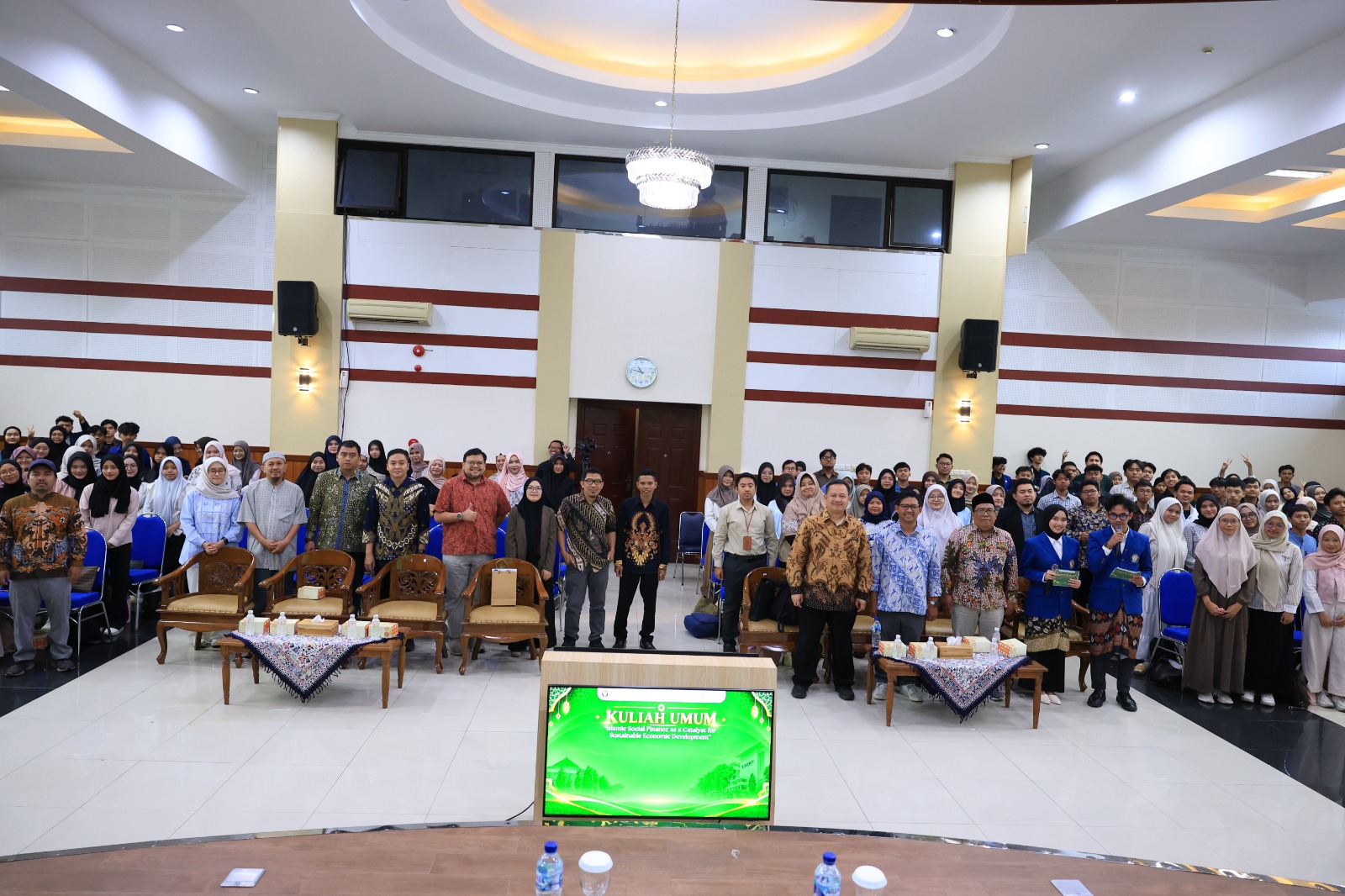
Semarang, September 9, 2026 — The Faculty of Economics and Business (FEB), Universitas Diponegoro, held a Public Lecture on Islamic Social Finance under the theme “Islamic Social Finance as a Catalyst for Sustainable Economic Development” on Wednesday, September 9, 2026, at Pertamina Hall, FEB Undip. The event featured Prof. Waryono Abdul Ghofur, Director of Zakat and Waqf Empowerment at the Ministry of Religious Affairs of the Republic of Indonesia, and Prof. Raditya Sukmana, Professor at Universitas Airlangga, as distinguished speakers. The public lecture explored the strategic role of Islamic Social Finance in supporting sustainable, inclusive, and equitable economic development while providing students with broader insights into the potential of zakat, waqf, and other Islamic social finance instruments in addressing contemporary socio-economic challenges.
The public lecture served as an academic forum to discuss the development and strategic role of Islamic Social Finance (ISF) in promoting sustainable, inclusive, and equitable economic development. The topic is highly relevant to contemporary development challenges, particularly poverty, economic inequality, community empowerment, and the need for a financial system that goes beyond profit orientation and creates broader social benefits.
The event featured two distinguished speakers: Prof. Waryono Abdul Ghofur, Director of Zakat and Waqf Empowerment at the Ministry of Religious Affairs of the Republic of Indonesia, and Prof. Raditya Sukmana, Professor at Universitas Airlangga. Their perspectives brought together policy and institutional aspects of zakat and waqf management with academic insights into the role of Islamic Social Finance in economic development.
Islamic Social Finance as a Development Instrument
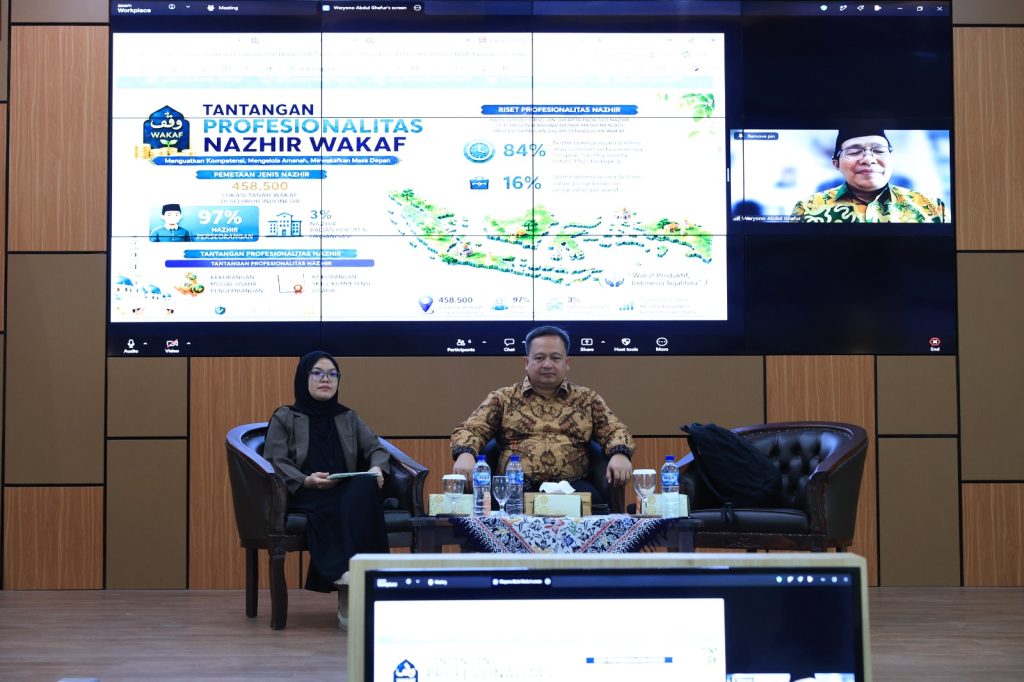
Islamic Social Finance represents an important component of Islamic economics that emphasizes social welfare and public benefit. Instruments such as zakat, infaq, sadaqah, waqf, and qard hasan have significant potential not only for wealth redistribution but also for community economic empowerment.
Zakat, for instance, is not merely a religious obligation but also has important socio-economic functions through the distribution of resources to disadvantaged groups. Waqf, meanwhile, has a long-term character that allows its assets to be developed and generate sustainable benefits in areas such as education, healthcare, social services, and productive economic activities.
This approach demonstrates that Islamic Social Finance can move beyond a conventional charity-based approach toward empowerment. Social funds can be utilized not only to address immediate needs but also to strengthen beneficiaries’ capacity and economic independence through productive financing, skills development, mentoring, and market access.
Supporting Inclusive and Sustainable Economic Development
Islamic Social Finance is closely connected to the broader agenda of sustainable development. When properly managed, Islamic social finance instruments can contribute to poverty reduction, greater financial inclusion, economic opportunity creation, and stronger community resilience.
In this context, ISF can function as a catalyst by connecting community resources with the needs of vulnerable groups while generating broader economic and social impacts.
Strengthening collaboration among zakat and waqf institutions, government agencies, Islamic financial institutions, universities, businesses, and communities is essential to building a stronger Islamic Social Finance ecosystem. Digitalization also provides new opportunities for fundraising, distribution, beneficiary identification, transparency, and impact measurement.
Challenges and the Importance of Good Governance
Despite its considerable potential, Islamic Social Finance continues to face several challenges. Public literacy, optimization of fundraising, institutional professionalism, transparency, impact measurement, and inter-institutional coordination remain important areas for improvement.
Therefore, the success of Islamic Social Finance should not be measured solely by the amount of funds collected and distributed. More importantly, its success should be assessed based on the extent to which these resources generate tangible social and economic improvements and promote greater community independence.
The public lecture is expected to broaden students’ understanding of the strategic position of Islamic Social Finance within the economy. It also encourages students to view Islamic finance beyond its commercial dimension, by considering its social, institutional, and sustainable development roles.
Through this academic forum, students are expected to recognize that Islamic Social Finance is not merely a philanthropic instrument, but also has the potential to become a significant force in building a more inclusive, equitable, and sustainable economy.